
The New Prometheus
Today it is clear there is a new godly fire...

You may remember him as the titan who committed one of the most consequential crimes in Greek mythology. He defied Zeus by stealing fire from Olympus and giving it to mankind.
Indeed, his name is Prometheus, which means “Forethought”, while later he would be remembered as the “Lightbringer”. But, in so doing, Zeus did not only punish Prometheus, but mankind too. And so, the king atop Mount Olympus created women.
But why was fire so important to the gods? Why did Zeus intend to keep it out of our reach?
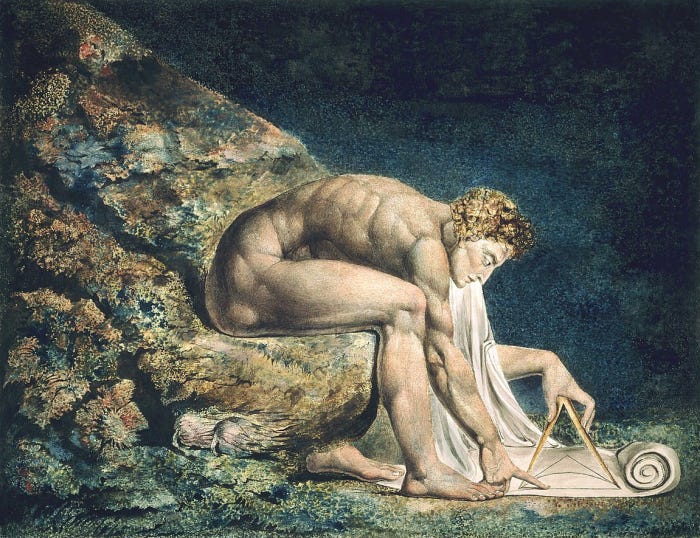
To the ancient Greek imagination, fire was more than warmth or light. It allowed us to accelerate. Fire changed our very trajectory on earth, allowing us to cook food, forge metal weapons, harden tools and push back against the darkness that had long belonged to the predators of the wilderness.
Before fire, mankind was at the mercy of nature. Winter claimed countless lives and the lurking beasts of the night carried off the weak. Fire changed that forever. It narrowed the gap between man and nature and gave us something that had previously been a mystery of the gods.
But power comes at a cost. And the greater the power, the greater the consequence. Indeed, Zeus punished Prometheus by chaining him to a mountain where an eagle descended each day to devour his liver. And each night it regenerated, only for the torment to begin again.
Today it is clear there is a new godly fire that may just be the latest Promethean gift: Artificial Intelligence.
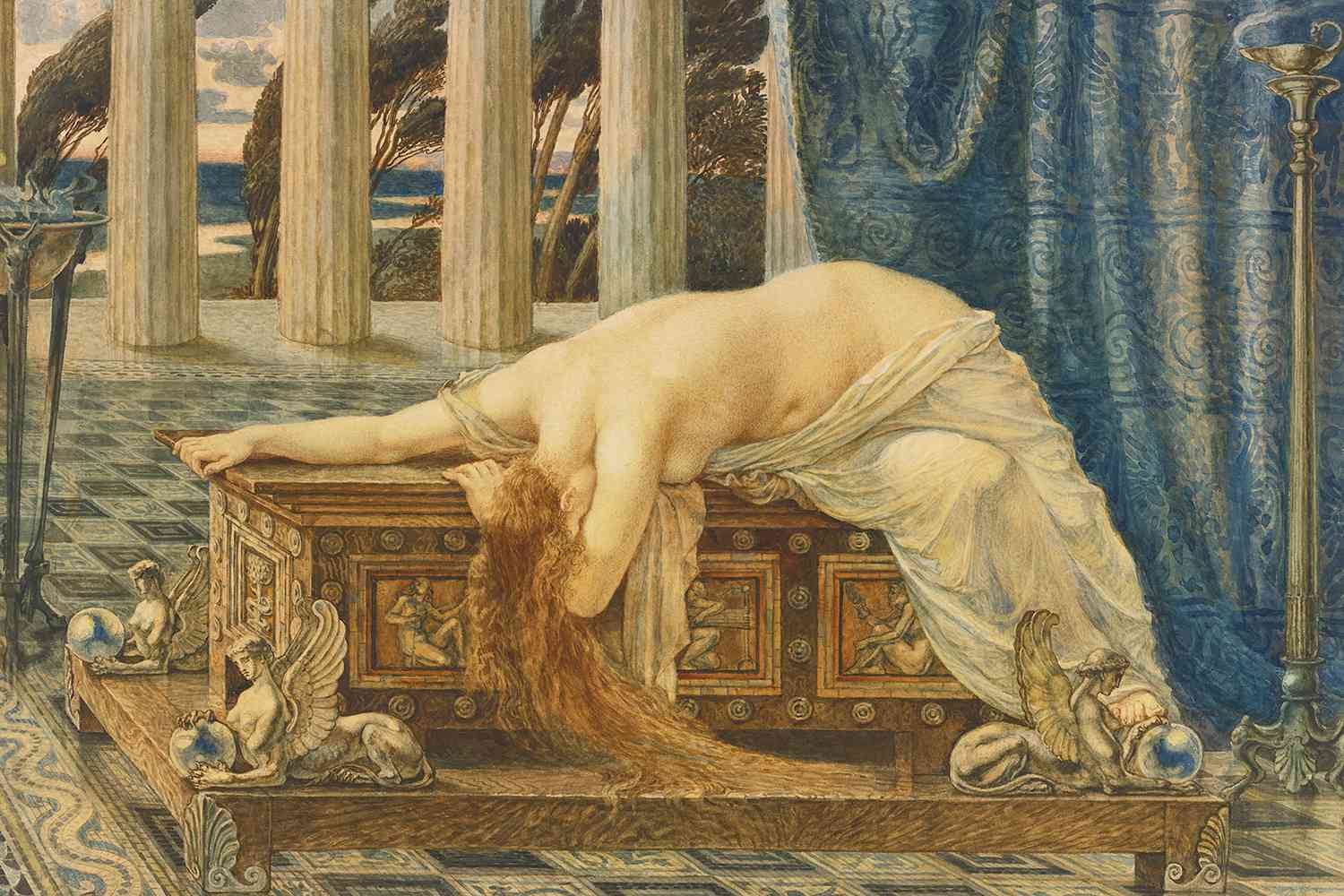
When Prometheus stole fire, Zeus punished not only the titan but mankind itself. According to Hesiod, he fashioned Pandora and sent her among mortals as a beautiful “deception”. Hidden within her jar were countless sorrows waiting to be released upon the world.
Artificial intelligence bears an uncomfortable resemblance to Pandora’s Box. There is the promise of abundant knowledge, yet no one can say with certainty what else may pour from it. Once it becomes woven into every aspect of human life, AI may prove impossible to separate from the troubles it unleashes.
Unlike fire, which simply improved human survival, AI may propel us further than any invention since the mastery of fire. Fire changed our surroundings, but AI will change the mind itself.
AI can answer questions, analyse information, generate ideas and perform intellectual tasks that previously required years of intense training and academic study. Knowledge itself, once scarce and hard to obtain, has become increasingly available and on demand.
Already, university students studying nursing, physics or law are using AI to write essays. Programmers increasingly rely on machine-generated code, while professionals across countless industries consult algorithms before major decisions.
In this sense, artificial intelligence does not help humanity compete with nature. AI may help humanity compete with the gods.
For thousands of years, omniscience was considered a divine attribute. The gods knew the mysteries of the universe us mere mortals could not comprehend. Today, ordinary people can consult a machine capable of accessing and processing more information than any individual could absorb in a lifetime. And it can do it in seconds.
Have we not acquired something that feels suspiciously close to an external intelligence? What punishment accompanies this gift?
While many fear job losses, misinformation, automation, security breaches, data farming or surveillance, what if the real danger dwarfed all of these? What if the deeper danger was outsourcing thought itself? In that case, all the other concerns become secondary.
Prometheus gave humanity the fire, but he did not give humanity wisdom. While AI remains a tool now, soon we will become so intertwined with it that it becomes necessary to rely on it for daily tasks.
Why struggle through a difficult problem if a machine can solve it? Why spend years acquiring expertise if an algorithm can provide an instant answer? Why wrestle with an argument if a machine can write one for you?
Soon, technology may tempt us to surrender the responsibility to think for ourselves. What then?
A civilisation that delegates too much labour grows weak and unequipped to maintain it. A civilisation that delegates too much thought…time will tell.
If Prometheus narrowed the distance between man and nature, artificial intelligence may narrow the distance between man and god.
Therefore, if every gift contains a punishment, one must wonder if our eagle has begun its descent.
When he had built this fine but evil creature,
the price for fire, he led her out to the other gods
and mortals, resplendent in the adornments
of Zeus’ grey-eyed daughter. Gods and men
alike were awed when they saw the steep
deception, which men could never control.
For she was mother to the race of females,
who live with men but are their greatest foe,
always a friend of luxury, never of poverty.
…
so also did high-thundering Zeus create women
to be the bane of mortal men, partners in painful
deeds. And he exchanged another good for evil:
he who flees marriage and women’s foul deeds
and refuses to marry comes to old age deprived
of a caretaker; when he lives, he lacks nothing,
but when he dies his relatives divide his fortune
-Hesiod’s Theogony (Michael Heumann translation)
This is an interesting perspective, especially with people working on AI swearing it’s already gained sentience we really are turning ourselves into gods in a sense.